12 axes results, explained
Three typical results from the test, with the image each one produces and what the numbers say.
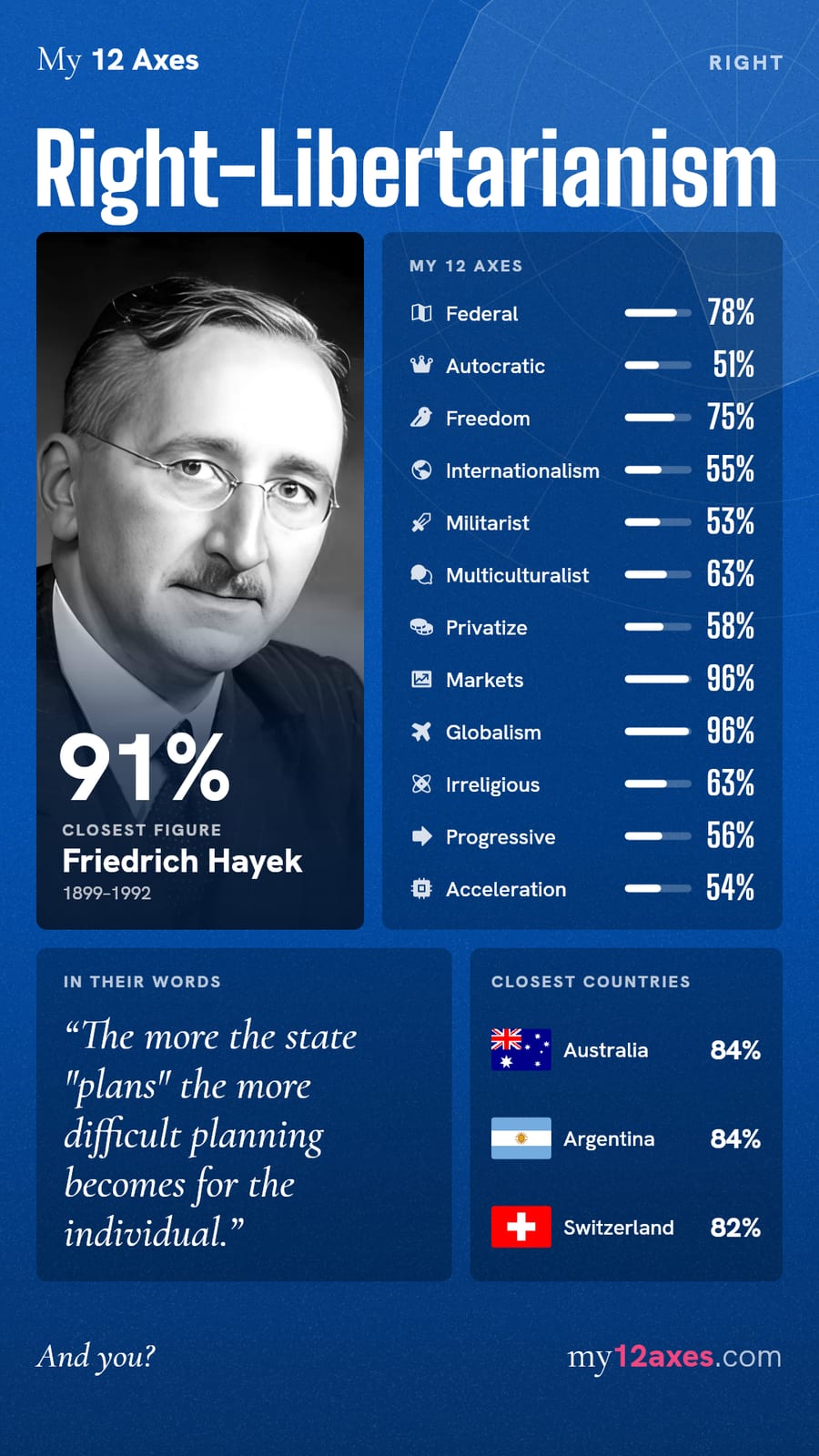
A right-libertarian result
Markets and globalism are both at 96%, the strongest numbers on this card, and freedom beats security at 75%. Together they point to right-libertarianism, a 95% match. Federal at 78% says power should sit close to home.
The quiet numbers matter as well. Democratic or autocratic is nearly even at 51% autocratic, so this person trusts markets far more than they care about the form of government. Friedrich Hayek is the closest figure at 91%, which fits the economics. Australia and Argentina lead the countries at 84%.
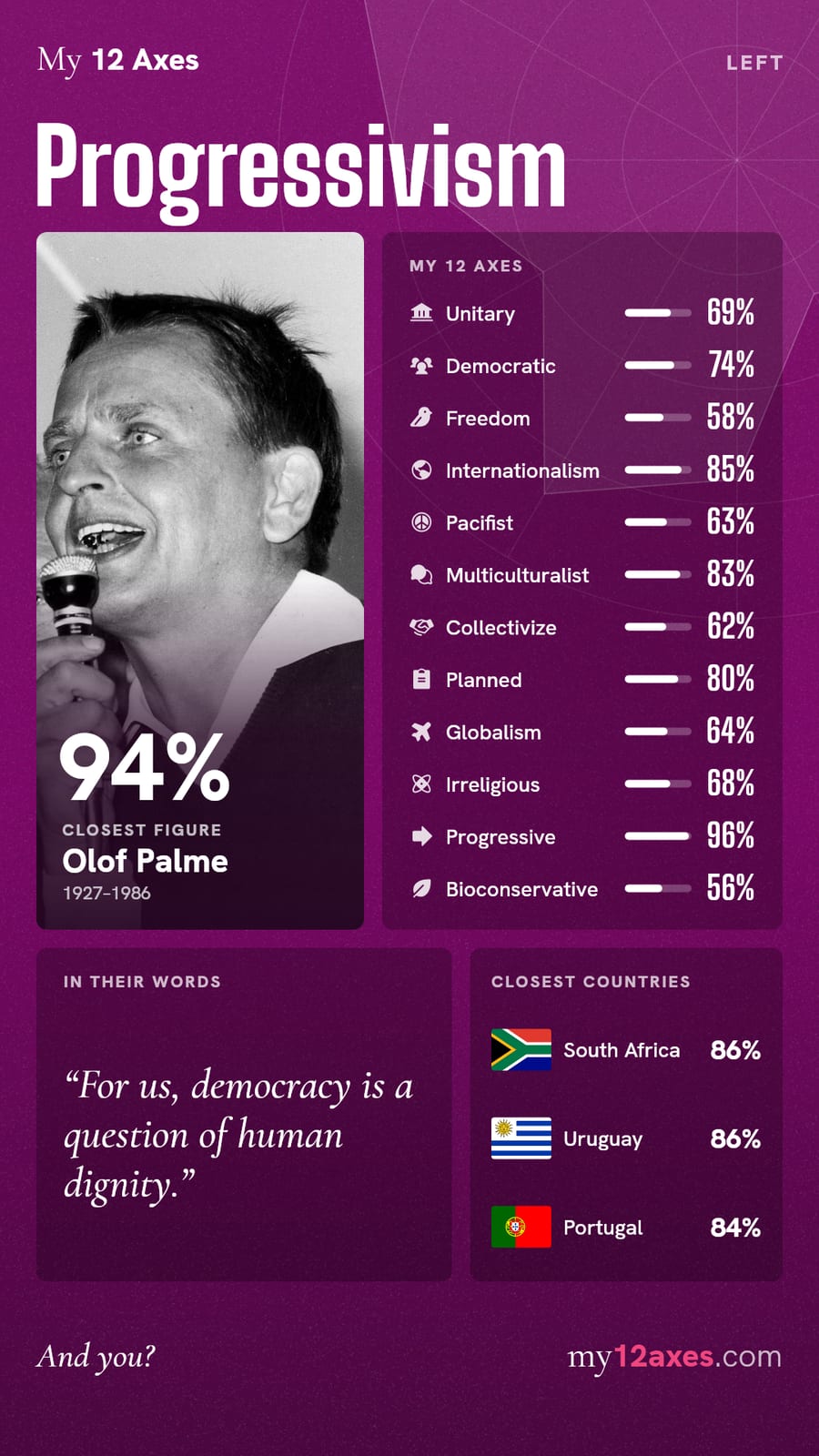
A progressive result
Progressive at 96% is the loudest number here, followed by internationalism at 85% and multiculturalism at 83%. Planned economy at 80% then rules out the liberal version of this outlook. The ideology is progressivism, a 97% match.
Unitary at 69% is the surprise: this person wants those policies applied the same way everywhere, not left to regions. Olof Palme, the closest figure at 94%, built exactly that kind of national welfare state. South Africa and Uruguay share first place among countries at 86%.
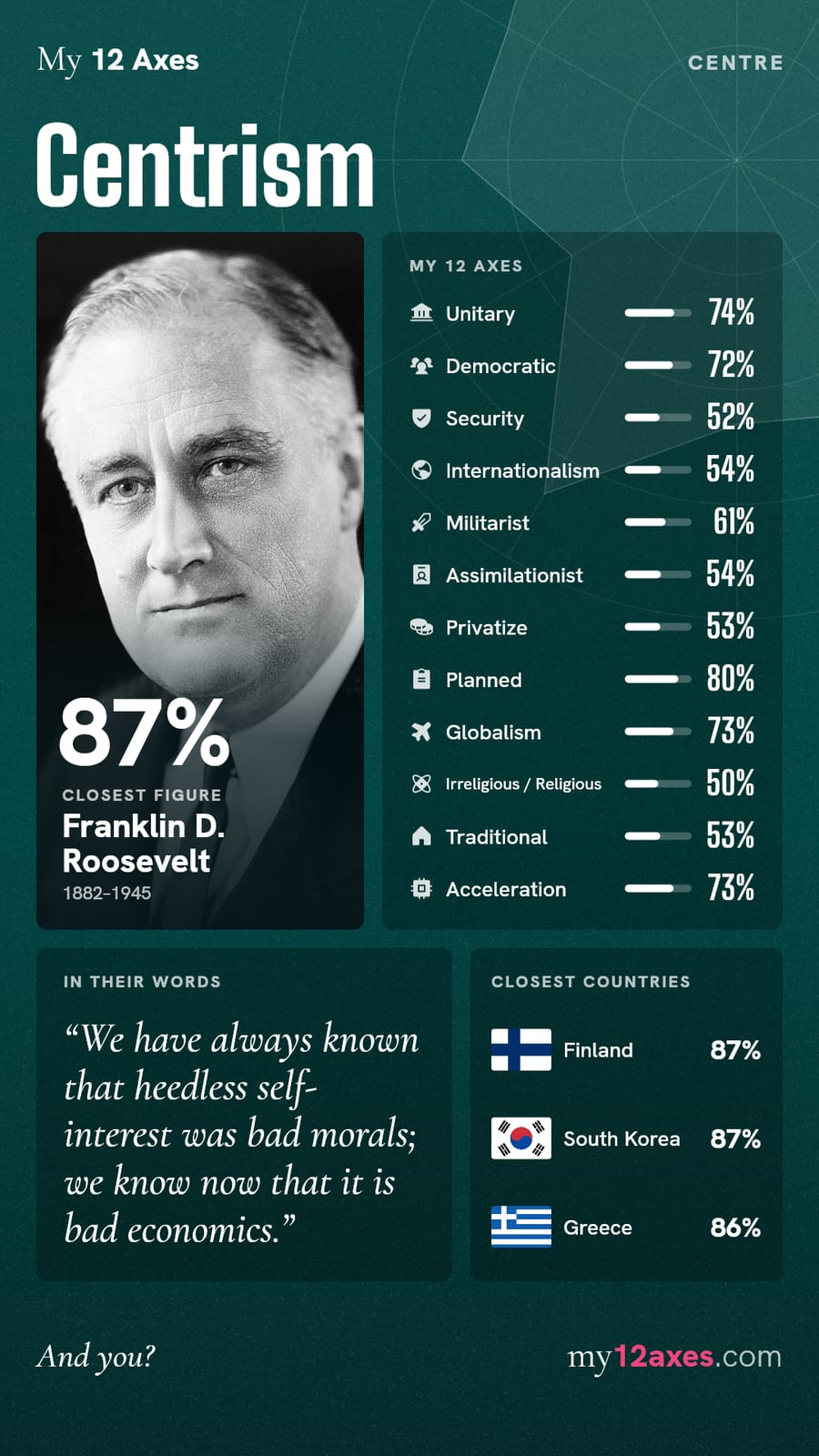
A centrist result
Centrism at 97% does not mean having no views. Most axes sit close to the middle, with religion exactly even at 50%, but planned economy at 80%, democratic at 72% and acceleration at 73% stand out sharply.
That mix explains Franklin D. Roosevelt as the closest figure at 87%: moderate on most social questions, confident that the state should steer the economy. Finland and South Korea lead the countries at 87%. Two centrists can look very different on a card like this, which is the point of twelve axes.